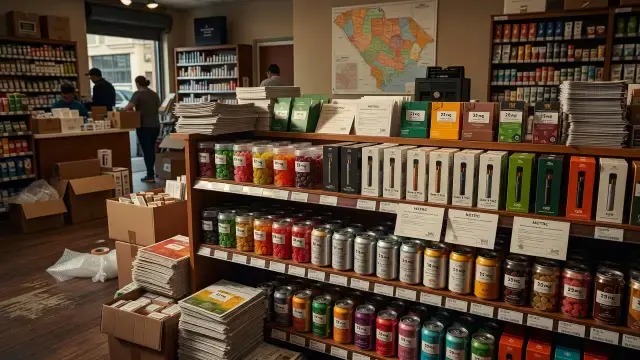
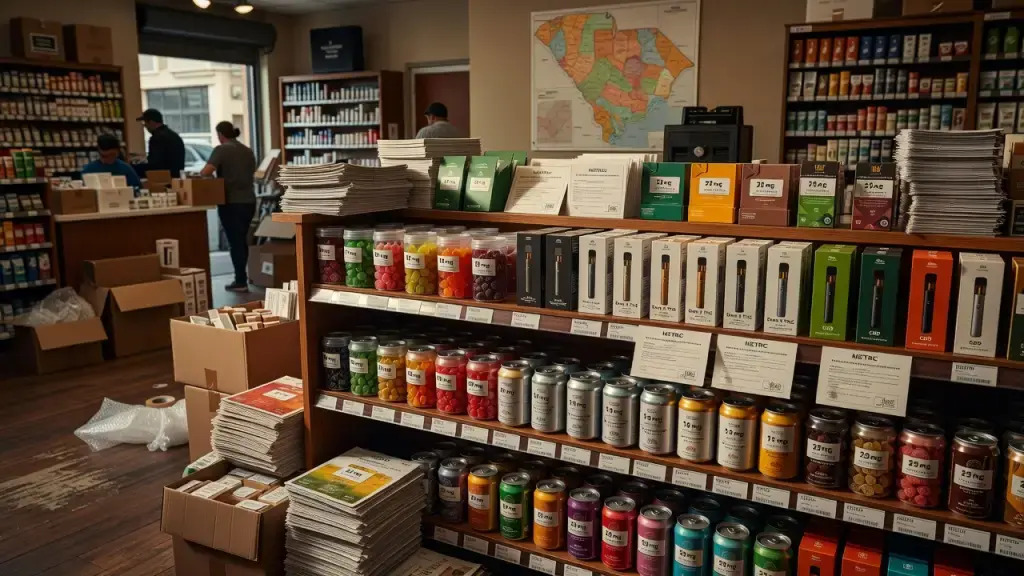
A federal deadline set for Dec. 11 threatens to wipe hemp-derived THC beverages, gummies and vapes off South Carolina shelves, eight years after a farm bill loophole let the category exist in the first place. For a state that passed no regulatory framework of its own, the result is a hard stop rather than a managed transition - and operators from pharmacies to beverage makers are now making inventory and business decisions under real time pressure.
How an agricultural loophole became a consumer product
The 2018 farm bill legalized hemp by setting a 0.3 percent dry-weight limit on Delta 9 THC, a threshold meant to separate industrial fiber crops from intoxicating marijuana. The math didn't account for finished products. A beverage or gummy could stay under that weight-based ceiling while still delivering a meaningful dose of THC, because the compound is a tiny fraction of the product's total weight. Manufacturers also began synthesizing Delta 8 and Delta 10 from CBD, expanding the category further. None of it required state licensing, seed-to-sale tracking, or the testing infrastructure that regulated marijuana markets rely on. In practice, a national product category grew up outside the compliance systems - METRC-style tracking, mandatory COAs, excise tax - that govern licensed cannabis retail elsewhere.
What the Dec. 11 cutoff actually changes
The new federal threshold - 0.4 milligrams of THC per container - is low enough to disqualify nearly every product currently on shelves, since typical gummies run 10 to 25 milligrams and beverages commonly carry 5 to 10 milligrams per serving, with some products far higher. For South Carolina specifically, the absence of state-level legislation means federal law simply takes over once the deadline hits; there's no state regulatory backstop to soften the landing the way there is in states that already license or restrict these products. That leaves beverage producers, independent pharmacies, vape shops and distributors with few options beyond clearing inventory, pivoting formulations, or shutting down product lines entirely.
The compliance gap regulators never closed
What's striking here is how long this operated without the basic guardrails regulated cannabis retail takes for granted: age verification standards, potency caps, mandated lab testing for pesticides and solvents, child-resistant packaging requirements enforced at the state level. Some retailers applied their own age restrictions voluntarily; nothing required it. Law enforcement and school officials have flagged the lack of oversight as a genuine access problem, particularly around vape products reaching underage users. That's the tension regulators in Washington now face - a market this size doesn't disappear cleanly just because a weight-based loophole closes, and a prohibition-only approach pushes activity toward less accountable channels rather than more testing and disclosure.
What operators and suppliers should be watching
- Whether Congress amends the new threshold before Dec. 11 - several bills, including one from a South Carolina delegation member, aim to regulate rather than prohibit.
- Whether South Carolina lawmakers revisit age-limit and point-of-sale restrictions next session, filling the gap federal law currently occupies by default.
- How wholesale suppliers handle remaining inventory, given that interstate shipping of these products becomes legally exposed once federal prohibition takes effect.
- Whether independent pharmacies and specialty retailers can pivot to compliant alternatives without losing a meaningful share of revenue tied to this category.
None of this resolves the underlying policy question cleanly. Regulation - testing requirements, potency limits, age gating, adult-use-style tax treatment - is what much of the industry says it wants rather than an outright ban. Whether Washington delivers that before the deadline, or lets prohibition take hold by default, will shape how South Carolina retailers, suppliers and pharmacies plan inventory and staffing through the end of the year.