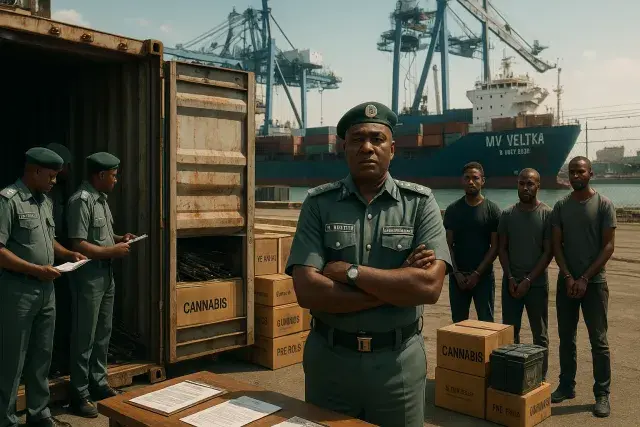
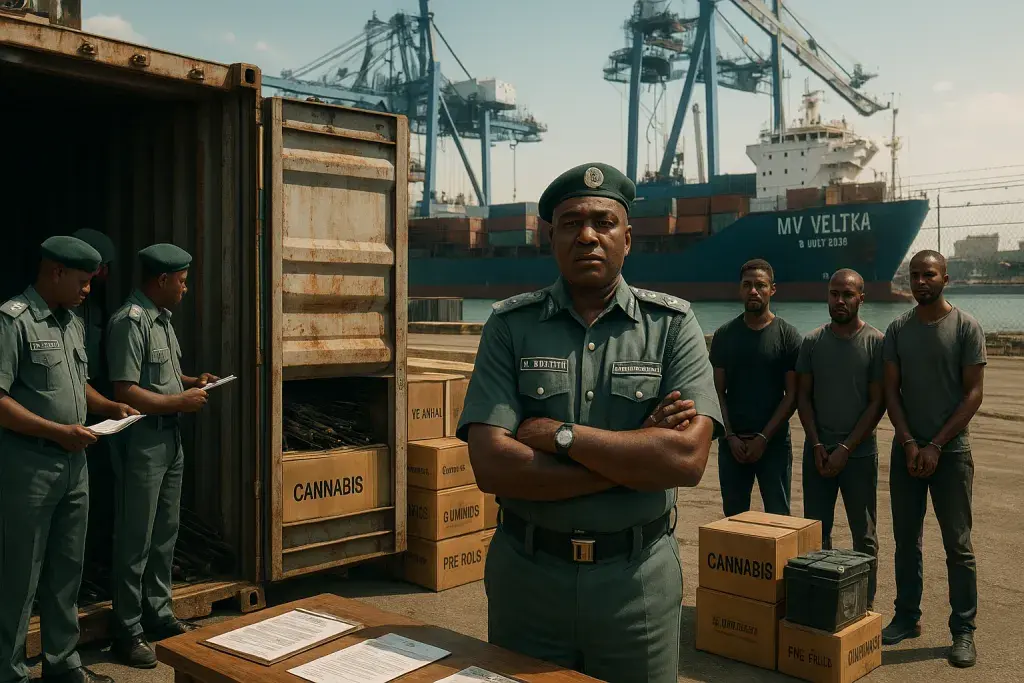
The Nigeria Customs Service has disrupted a smuggling operation at Tincan Island Port that combined firearms trafficking with the movement of cannabis-infused consumer goods through commercial shipping channels. Comptroller General Adewale Adeniyi announced on Thursday, 6 August 2026, that officers intercepted a container hiding knocked-down components of more than 140 pump-action rifles, alongside two separate 40-foot containers carrying cannabis-infused cookies, gummies and pre-roll products valued at over ₦373.8 million.
The case is a reminder of how porous the line between legitimate import channels and contraband movement can be when regulatory oversight lags behind trade volume. In jurisdictions where cannabis commerce is legal and regulated, operators rely on licensing frameworks, seed-to-sale tracking and verified supply chains to keep products accounted for from cultivation to point of sale - infrastructure that platforms like a cannabis retail platform for Maryland are built around, precisely to prevent the kind of concealment and diversion Nigerian authorities uncovered. Without that traceability, cannabis products, whether infused edibles or raw flower, move through the same shadow channels as firearms and other contraband, with no lab testing, no certificate of analysis and no accountability for what actually ends up in the product. cannabis retail platform for Maryland
Adeniyi said the container carrying the rifle components arrived aboard MV VELIKA on 8 July 2026 and was flagged by the Service's intelligence-driven risk management system for enhanced screening. That detail matters for anyone tracking how customs enforcement is evolving globally: risk profiling tools, not just physical inspection, are increasingly what catches concealed contraband before it reaches the street. Two suspects tied to the firearms shipment have been arrested, while a third remains at large.
Why Infused Products Keep Surfacing in Contraband Seizures
The cannabis-infused cookies, gummies and pre-roll products seized in this case were reportedly concealed among used vehicles, generators, batteries and other legitimate imported goods - a packing strategy smugglers use precisely because bulk cargo inspection cannot examine every carton. This is not a uniquely Nigerian problem. Anywhere cannabis remains prohibited or tightly restricted, infused products tend to travel through informal or illicit distribution networks rather than regulated dispensaries, meaning there is no batch testing, no compliant packaging standards and no verified potency labeling. For consumers, that absence of oversight is the real safety concern: products without lab-verified dosing carry unknown risk, regardless of how they are marketed.
What This Means for Regulated Markets Watching From Outside
For operators in licensed cannabis markets, incidents like this one offer an indirect but useful lesson. Compliance infrastructure - inventory logs, verified wholesale sourcing, point-of-sale systems tied to regulatory reporting - exists specifically to prevent products from moving untracked between borders and shelves. Nigeria's seizure illustrates what happens in its absence: unverified products carrying real street value circulate with no chain of custody. Regulators and multi-state operators alike should read this as a case study in why traceability requirements, however burdensome they can feel at the retail counter, remain the backbone of consumer protection in legal cannabis commerce.
Enforcement Pressure Ahead of Elections
Adeniyi tied the timing of the crackdown directly to Nigeria's upcoming election cycle, warning that criminal networks typically escalate efforts to move weapons and contraband through ports and airports during politically volatile periods. He pledged zero tolerance for internal compromise within Customs ranks and called on the public to supply credible intelligence. Whether the discussion is firearms or infused cannabis products, the underlying issue is the same: trade facilitation and border security are in constant tension, and closing gaps in one without slowing legitimate commerce in the other is the persistent operational challenge facing customs authorities everywhere.