Massachusetts voters face a ballot question that would unwind recreational cannabis sales statewide, and nowhere is the math more exposed than in Berkshire County, where small towns have built real line items in their budgets around dispensary tax revenue. Question 8 would preserve limited adult possession and leave the medical program intact, but it would shut down the retail infrastructure that took a decade to build. Local officials say the fallout wouldn't be theoretical - it would show up on next year's tax bill.
Small Towns, Outsized Exposure
Here's the mechanism that matters for anyone outside the industry trying to understand why select boards are getting involved: municipalities use the prior year's revenue, including cannabis-related local option taxes, to set the residential property tax rate for the year ahead. Lee Town Administrator Chris Brittain put it plainly - if that revenue disappears, something else has to fill the gap, and in practice that usually means homeowners. Sheffield, a town of roughly 3,300 people with ten active cannabis licenses, took in close to $187,000 in cannabis taxes last fiscal year. That's not a rounding error in a small-town budget; it's a meaningful chunk of discretionary funding, according to Select Board Chair Lee Buttala. Pittsfield carries the heaviest concentration of licenses in the county, but the dependency runs deepest in the smaller towns that have far less room to absorb a shortfall.
What Repeal Would Actually Do to Operators
The ballot question doesn't eliminate cannabis outright - adults could still possess up to an ounce, and medical dispensaries would keep operating. Retailers would technically have the option to convert to medical-only licenses. Industry operators say that's not a real off-ramp. Devin Bajardi, co-owner of Budhaus Cannabis in Pittsfield, estimates that most adult-use stores attempting that pivot would fail before any medical-only market leveled out, since the customer base, purchasing patterns, and compliance requirements for medical retail are narrower and harder to sustain at scale. There's also a physical problem: cannabis cultivation and retail buildings are built for a specific purpose, with HVAC and electrical infrastructure sized for grow operations and secure storage, not easily repurposed for another use. More than 400 dispensary properties and roughly 100 cultivation sites statewide would be left without a legal function overnight.
Where Displaced Demand Goes
This is the part regulators and public-health advocates on both sides tend to skip past: demand doesn't vanish when supply does. Consumers who rely on legal, lab-tested products with compliant packaging and verified COAs don't necessarily stop buying - they shift to whatever is available, which in a repeal scenario likely means the illicit market or cross-border purchases driven back into the state. Bajardi raised the obvious question directly: does repeal mean people drive to another state and bring products back, or does it mean reverting to unregulated sellers with no testing standards at all? Neither outcome serves the consumer-safety goals that repeal supporters say they want. Select Board Chair Bob Jones also flagged a secondary concern - some consumers currently using cannabis products for sleep or minor discomfort might shift back toward over-the-counter or prescription alternatives, which carries its own set of risks.
The Numbers Driving the Debate
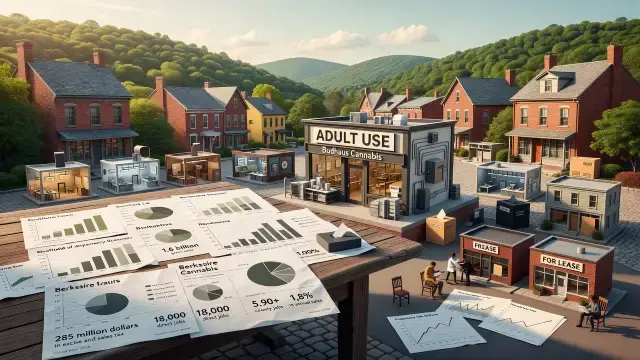
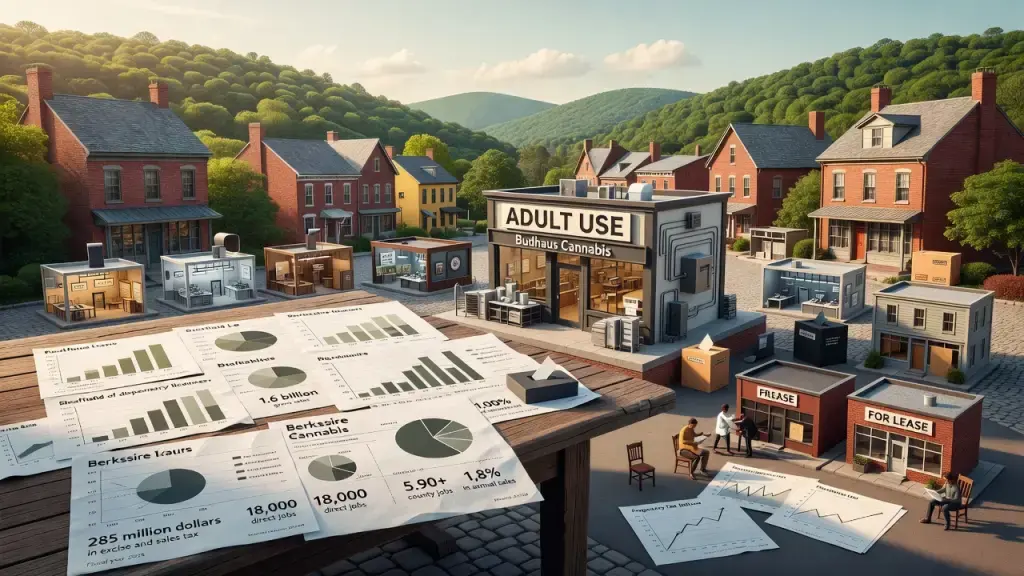
Statewide, the Cannabis Control Commission reported $285 million in excise and sales tax collected in fiscal year 2026, with more than 18,000 people directly employed in the industry and over $1.6 billion in gross sales. Berkshire County, with just 1.8 percent of the state's population, holds 5.9 percent of its dispensary licenses - a disproportionate footprint that makes the county a useful stress test for what repeal would mean economically. An analysis commissioned by Canna Provisions, a Western Massachusetts operator, put county-level adult-use employment at 1,490 jobs and annual sales at $120 million, a figure the firm says captures indirect economic activity that earlier estimates missed. Supporters of repeal point to impaired-driving data and workforce productivity concerns, though industry representatives dispute the sourcing and framing of some of those figures. What's not in dispute is the operational reality: a mature, taxed, tested, and regulated supply chain is difficult to rebuild once dismantled, and the businesses, landlords, and towns built around it would have little time to adjust before the law takes effect.