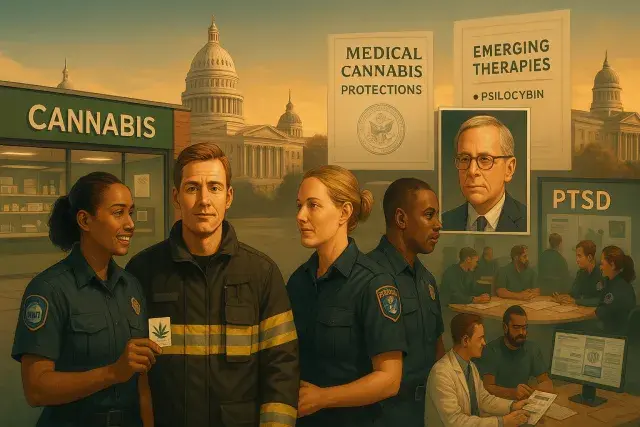
A growing number of states are rethinking how they support first responders dealing with occupational trauma - and cannabis policy is part of that shift. From employment discrimination protections for registered medical cannabis patients to expanded access to psilocybin-assisted research programs, legislatures in 2025 have moved on multiple fronts. For the licensed cannabis industry, these developments carry real regulatory and operational weight.
Maryland's Employment Protections Create a New Compliance Reference Point
Maryland's new law - effective this October - bars employers from discriminating against firefighters, EMTs, paramedics, and other rescue workers who are registered medical cannabis patients and test positive for cannabis metabolites while off duty, provided they are not impaired during work hours. That distinction matters enormously. The law draws a line between the presence of metabolites in a drug screening, which can persist in the body long after any impairment has passed, and actual on-duty incapacitation. For dispensary operators serving medical patients in Maryland, this is meaningful context - read more about how state-by-state regulatory differences shape the dispensary compliance environment in markets where employment law intersects with medical cannabis access. The Maryland framework reinforces what medical cannabis advocates have long argued: that licensed patient status and workplace safety are not inherently in conflict. But it also puts pressure on dispensaries and their B2B partners - particularly workforce management software vendors and HR compliance tools - to track how impairment-versus-metabolite distinctions are being codified across state lines.
Ohio's Commission Model and What It Signals for Treatment Access
Ohio Gov. Mike DeWine signed legislation creating a Post-Traumatic Stress Injury Commission tasked with reviewing applications from eligible first responders seeking assistance covering treatment costs. The commission model is notable for a different reason: it doesn't prescribe a specific therapy. That open architecture leaves room for medical cannabis to be part of an approved treatment plan in a state where adult-use cannabis is now legal and the dispensary market is mature. Whether the commission will treat medical cannabis expenditures as reimbursable remains to be seen - that determination will likely come through the rulemaking process. Dispensary operators and multi-state operators (MSOs) with Ohio licenses should watch the commission's enabling regulations closely. If reimbursement pathways open up for medical cannabis as a recognized PTSD treatment modality, that has downstream implications for patient volume, medical card registration rates, and wholesale demand for specific product categories.
Psilocybin Research Expands - and It's Not Unrelated to Cannabis Operators
Connecticut's expansion of a Yale University psilocybin-assisted therapy pilot program - now open to any state resident 18 or older who meets clinical eligibility criteria - and Missouri's legislative effort to permit research use of psilocybin and ibogaine for veterans and first responders both reflect a broader pattern: the decriminalization-to-medical legitimacy trajectory that cannabis operators know well. Missouri's bill stalled when the legislature adjourned in May, but the conversation isn't over. The thing is, cannabis industry observers have seen this arc before. A compound moves from schedule-one stigma to research exception to clinical access to, eventually, regulated adult-use commerce. That doesn't mean psilocybin is on a fast track to your wholesale menu - it isn't - but the policy mechanics now being applied to psychedelics were largely borrowed from the cannabis regulatory playbook. Seed-to-sale tracking concepts, institutional review board oversight as a compliance analog, patient registration requirements: these frameworks are familiar territory for licensed cannabis businesses.
The Operational Takeaway for Cannabis Businesses
For dispensary operators, the most immediate implication is on the medical side of the house. States extending legal employment protections to registered medical cannabis patients - particularly in high-stress occupational categories like first responders - validate the medical program's legitimacy and may support patient retention. Compliance teams should note that Maryland's impairment-versus-metabolite distinction could become a template other states adopt, which would affect how point-of-sale data, patient documentation, and medical card verification interact with evolving employer drug policies. More broadly, the legislative activity this year signals that states are willing to treat cannabis as one legitimate tool among several in addressing serious public health challenges - not a fringe accommodation. That framing matters for licensed operators dealing with banking access, payment processing reluctance, and stigma-driven lease restrictions. As retired firefighter Jason Cerrano put it, describing his years in Missouri emergency services: traumatic exposure accumulates over a career, and what once seemed shocking can start to feel routine. The states moving now are responding to that reality. Dispensaries operating in medical markets would do well to understand that their patient base includes people carrying exactly that kind of weight.