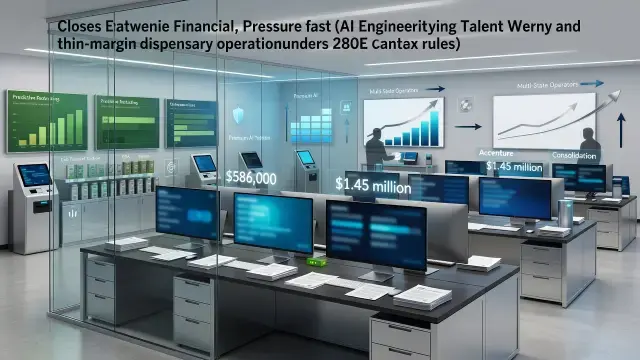
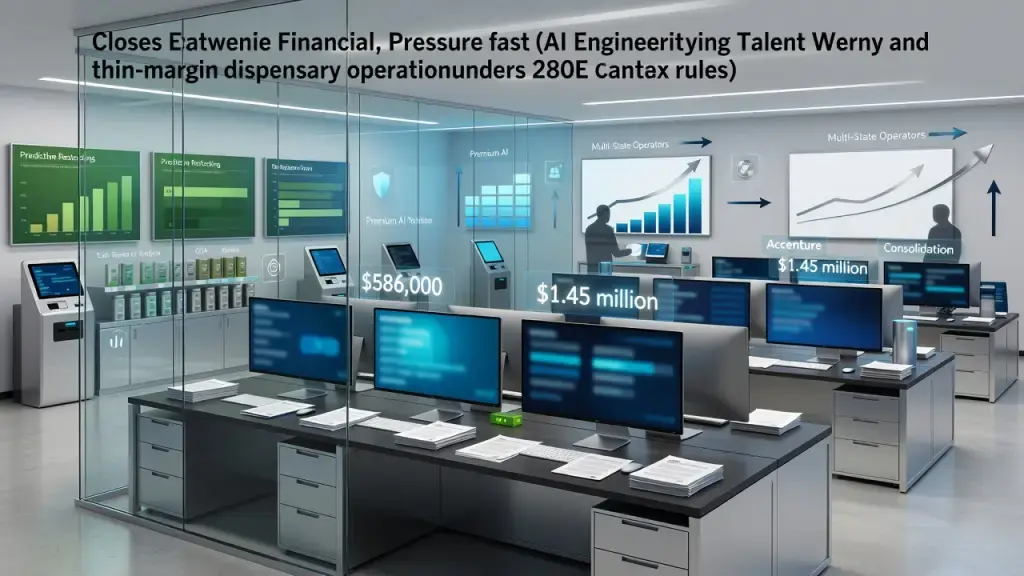
Forward-deployed engineers, the specialists who adapt AI systems to a company's actual operations, are now commanding total pay between $586,000 and $1.45 million a year, according to a recent Wall Street Journal report. That number isn't a cannabis story on its face. But for operators watching seed-to-sale platforms, POS vendors, and compliance software providers race to bolt AI features onto their products, it's a preview of what's coming down the supply chain in licensing fees, vendor contracts, and integration costs.
Why a Tech Hiring War Matters to Dispensary Operators
Cannabis retail runs on a dense stack of regulated software: METRC integrations, point-of-sale terminals, inventory tracking, tax reporting tools, age-verification systems. Every one of those vendors is under pressure to add AI-driven features - demand forecasting, automated compliance flagging, dynamic wholesale pricing - and every one of them now needs the same scarce engineering talent the Journal describes. Christian & Timbers estimates the U.S. has roughly 17,000 forward-deployed engineers total, with only about 2,000 qualifying as top-tier. That's a thin bench for an industry-wide build-out, and cannabis software vendors are competing against banks, retailers like Target, and consulting giants like Accenture for the same people.
The practical effect: smaller compliance and POS vendors serving the cannabis sector will likely pay more to build or buy AI capability, and some of that cost gets passed down through subscription fees, per-terminal charges, or integration add-ons. Dispensary owners already running thin margins under 280E tax treatment should expect vendor pricing conversations to shift as this talent war plays out across the broader software market.
Where Agentic AI Actually Touches Cannabis Retail
Agentic AI - systems that can execute multi-step tasks rather than just answer questions - has real applications in dispensary operations. Think automated reconciliation between POS sales data and state track-and-trace reporting, predictive restocking tied to budroom inventory velocity, or flagging anomalies that might indicate inventory shrinkage before an audit catches them. These aren't speculative; several seed-to-sale and retail software providers are already pitching AI-assisted compliance tools to multi-state operators.
The catch is implementation. Off-the-shelf AI tools rarely plug cleanly into a regulated retail environment with state-specific reporting rules, lab testing thresholds, and compliant packaging requirements. That's precisely the gap forward-deployed engineers are hired to close - translating a vendor's generic AI product into something that actually respects a jurisdiction's compliance logic. Jeff Christian's observation that companies increasingly want this work done in-house, rather than farmed out to consultants, applies just as much to a cannabis software company handling sensitive sales and customer data as it does to a bank.
What Operators and Vendors Should Watch
- Vendor consolidation: smaller compliance software firms may struggle to compete for engineering talent and could be acquired by larger platforms with deeper pockets.
- Rising integration costs: AI-enabled features may arrive as premium tiers rather than standard upgrades, affecting software budgets for independent dispensaries.
- Data privacy questions: keeping engineering work in-house, as Christian notes companies now prefer, matters even more in cannabis retail given the sensitivity of purchase records and compliance logs.
- Realistic expectations: AI promises around demand forecasting or compliance automation should be tested against a vendor's actual regulatory track record, not marketing language.
None of this changes the fundamentals of running a compliant dispensary - age verification, lab-tested product batches with valid COAs, accurate tax remittance, and clean delivery manifests still matter more than any software layer sitting on top. But as AI engineering talent gets more expensive and more concentrated in-house at major tech and consulting firms, cannabis retailers should expect their software partners' pricing, support quality, and feature roadmaps to shift in response. Operators who ask vendors pointed questions now - about where AI features actually touch compliance workflows, and who's building them - will be better positioned than those who wait for the invoice to explain it.