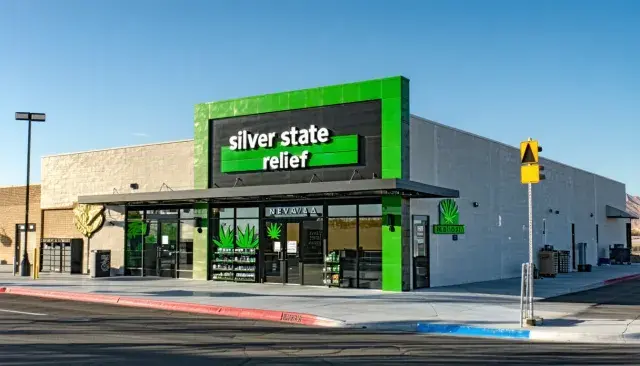
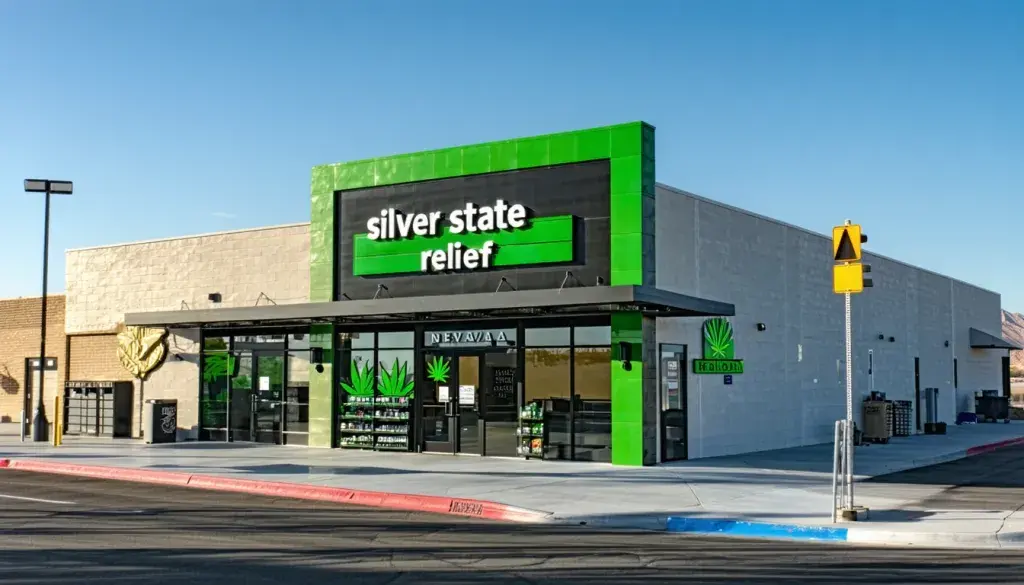
After more than ten years of patients holding legal cards with nowhere legal to spend them, Nevada's first licensed medical marijuana dispensary - Silver State Relief, in Sparks - opened its doors Friday. The opening marks not just a business launch but the closing of a strange legal gap: possession had been lawful since 2001, yet the retail infrastructure to support it didn't exist until the 2013 Legislature authorized dispensaries, with operations permitted only from April 2014 onward.
A Long Road to a Soft Launch
Aron Swan, Silver State Relief's general manager, has spent nearly two years on the paperwork, permits, construction, and cultivation logistics required to reach this point. The phone lines didn't stay quiet while he waited. His office fielded two or three inquiries a day for months from patients asking when the doors would open - a reliable signal of suppressed demand in a state where the only alternative had been the unregulated market.
The opening is deliberately modest. Swan expects to have roughly 12 to 14 pounds of product on hand at launch, enough to serve initial patients but far short of a full inventory. Because federal law prohibits interstate transport of cannabis regardless of state-level legality, Silver State Relief had to source its starter plants entirely from within Nevada - specifically from individual cardholders, who are permitted to grow up to 12 plants each for personal use. The dispensary assembled around 200 plants from across the state, and now that those plants are in commercial possession, the 12-plant ceiling no longer applies. A full harvest is roughly 60 days out.
For now, purchases are capped at a half-ounce per transaction, well below the state's allowable 2.5 ounces per 14-day period. Six strains will be available at opening - Girl Scout Cookies, Skunk #1, Ghost OG, Purple Kush, Blue Dream, and THC Snow - each carrying different cannabinoid profiles and intended medicinal effects. Swan is candid about the nomenclature: "The names might take away a little legitimacy, but that's how people know the products in the industry." Fair enough. The names are a quirk of how cannabis culture developed outside the regulatory system; they've simply migrated in.
The Infrastructure Behind a Regulated Grow
Silver State Relief operates across two properties: a retail dispensary on the corner of Greg Street and McCarran Boulevard in Sparks' industrial corridor, and a separate cultivation warehouse that required extensive retrofitting - including asbestos remediation - before it could house a controlled grow operation. The warehouse is largely empty for now, with a handful of active grow rooms and one space reserved for future edibles production. If Nevada moves toward recreational legalization, Swan says, the open floor space becomes an asset rather than a liability.
On the cultivation side, Swan made an unconventional hire: Daniel Hopper, 28, a recent Ph.D. graduate from the University of Nevada, Reno, where he studied plant biochemistry and spent time growing wine grapes in university horticulture labs. Cannabis and Vitis vinifera are not the same plant, obviously, but the underlying disciplines - controlled environment agriculture, nutrient management, disease prevention - transfer more cleanly than one might expect. Hopper didn't have direct cannabis experience; what he had was a rigorous framework for understanding how plants work, which is arguably more durable.
Testing is built into every harvest cycle. Silver State Relief works with two Nevada labs - Certified Ag Lab and 374 Labs - to verify THC potency and screen for pesticides and heavy metals before product reaches patients. That last item matters more than it might seem. On the unregulated market, buyers have no visibility into what's actually in the product; contamination with residual pesticides is a genuine, documented concern. Laboratory certification doesn't eliminate all risk, but it shifts the burden of accountability onto an auditable system. Patients can request test results at the counter.
A new pesticide-testing requirement passed by the state on June 30 pushed back the dispensary's opening by several weeks - Certified Ag Lab lacked the equipment, forcing a pivot to 374 Labs. It was the latest in a string of schedule slips that moved the target date from late spring to mid-July to the actual Friday opening. Regulatory friction of this kind is, in practice, the normal operating condition for any cannabis business entering a newly legalized framework. The rules are being written and revised in real time, and the businesses absorb the adjustments.
Patients, Policy, and the Community Around It
Nevada law authorizes medical marijuana for a defined list of conditions: AIDS, cancer, glaucoma, PTSD, cachexia (severe wasting), persistent muscle spasms including those associated with multiple sclerosis, seizures, severe nausea, and severe pain. That last category - severe pain - is the most commonly reported qualifying condition among cardholders, according to the Nevada Division of Public and Behavioral Health. It is also, notably, the condition with the broadest clinical debate around it, which partly explains why dispensary workers will need genuine training, not just product knowledge.
One Reno resident, Alan Carsey, 22, contacted the Reno Gazette-Journal to describe what the opening means for him specifically. Born with Tourette syndrome, Carsey experiences involuntary muscle spasms daily and has had severe adverse reactions to prescribed pharmaceuticals - visual disturbances, excessive sedation. He described the prospect of retail cannabis access as transformative for his quality of life. His account is a single data point, but it's representative of a larger population: patients who have cycled through available pharmaceutical options and found them inadequate or intolerable.
The Sparks City Council approved dispensaries in the city after relatively little public resistance - a result that surprised city planner Karen Melby, who had anticipated pushback. The approval process restricted marijuana facilities to commercial and industrial zones, required distance buffers from schools and substance-abuse treatment centers, and settled on a 7 p.m. closing time after some debate. As Melby put it plainly: "The hardest part for all of us is that it's all new." That's true of the city, the state regulators, and the businesses themselves. What's being built here isn't just a dispensary; it's the procedural scaffolding for an industry that didn't legally exist in this form two years ago.
The neighboring Capriotti's sandwich shop owner, for his part, is already considering extending weekend hours based on anticipated foot traffic. A small observation, but telling: legal cannabis retail, wherever it has taken hold, has a measurable downstream effect on surrounding commercial activity. Nevada is just beginning to find out what that looks like here.