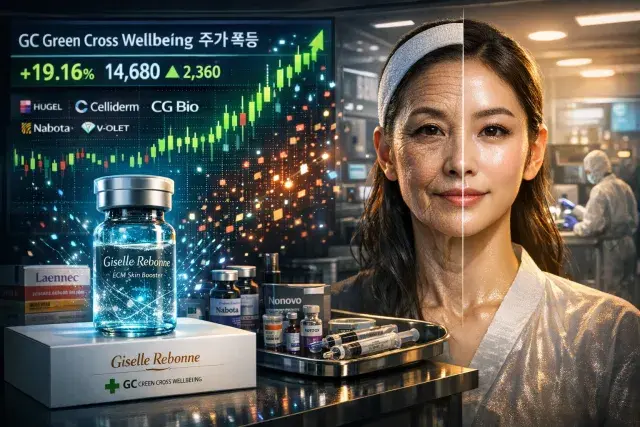
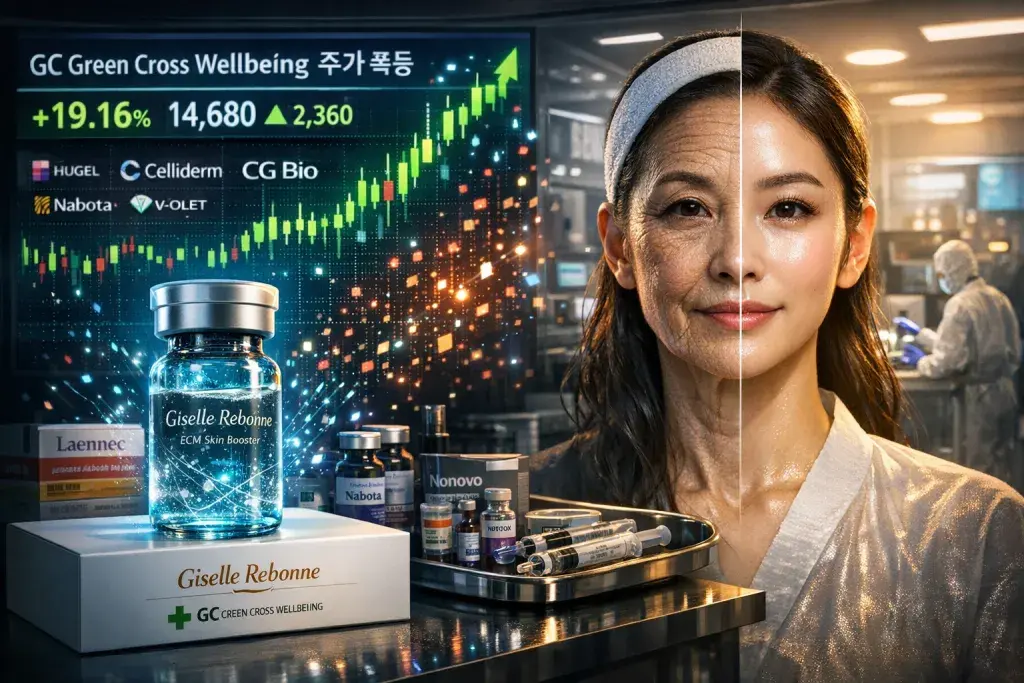
On October 25, shares of GC Green Cross Wellbeing (234690.KQ) rocketed 19.16% to close at 14,680 won, fueled by the announcement of its new human tissue-based extracellular matrix (ECM) skin booster, Giselle Rebonne. This leap underscores surging investor confidence in advanced regenerative aesthetics amid Korea's booming medical beauty sector.
Giselle Rebonne: A Next-Generation Regenerative Booster
Giselle Rebonne represents a leap forward in skin rejuvenation technology. Derived from human acellular dermal matrix (hADM), it delivers the ECM structure directly to the skin, unlike traditional boosters that merely stimulate collagen indirectly. This foundational approach supports tissue remodeling by providing a natural scaffold for cell migration and regeneration, mimicking the skin's innate architecture.
- Processed via MS Bio's proprietary decellularization to eliminate cells and immune triggers, ensuring high biocompatibility.
- Supplied through GC Green Cross Wellbeing's tissue bank at its Eumseong facility, guaranteeing quality control.
- Minimizes risks of rejection or inflammation, a common hurdle in tissue-derived products.
Experts in dermatology view ECM boosters as pivotal for addressing structural skin aging, where loss of matrix integrity leads to wrinkles and laxity beyond what fillers or toxins can fix.
Driving the Stock Rally and Portfolio Expansion
The 2,360-won gain reflects market enthusiasm for GC Green Cross Wellbeing's strategic pivot into cutting-edge aesthetics. The company now boasts a comprehensive lineup, including placenta injection Laennec, dermal fillers, skin boosters, and botulinum toxin Innovo—mirroring rivals like Hugel's co-promotion with Hans Biomed's Cellrderm.
Competitors such as CG Bio are gearing up for ECM launches tied to Daewoong's Nabota and V-Olet, signaling a trend toward bundled regenerative solutions. This positions GC Green Cross Wellbeing to capture share in a market projected to grow as consumers seek durable, biology-mimicking treatments over temporary fixes.
Implications for Aesthetic Medicine and Consumer Trends
Beyond the numbers, Giselle Rebonne taps into the global shift toward regenerative medicine in beauty. With K-beauty exports soaring and demand for "glass skin" fueling innovation, ECM products align with preferences for human-derived, minimally invasive options that promise long-term structural repair.
Implications include heightened competition, potentially lowering prices while raising standards for safety and efficacy. For patients, this means safer alternatives to synthetics, reducing downtime and side effects. As anti-aging science evolves, such advancements could redefine preventive dermatology, blending lifestyle wellness with biotech precision in an era where youthful vitality drives consumer spending.