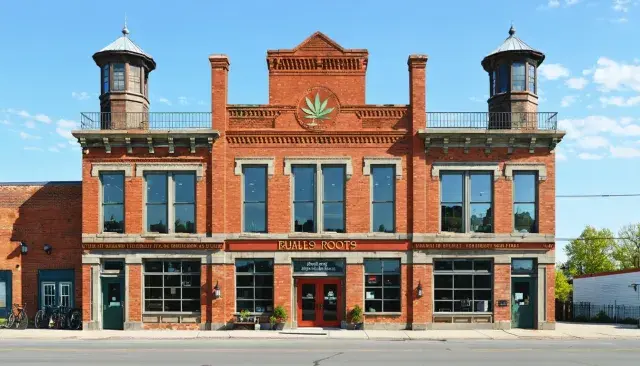
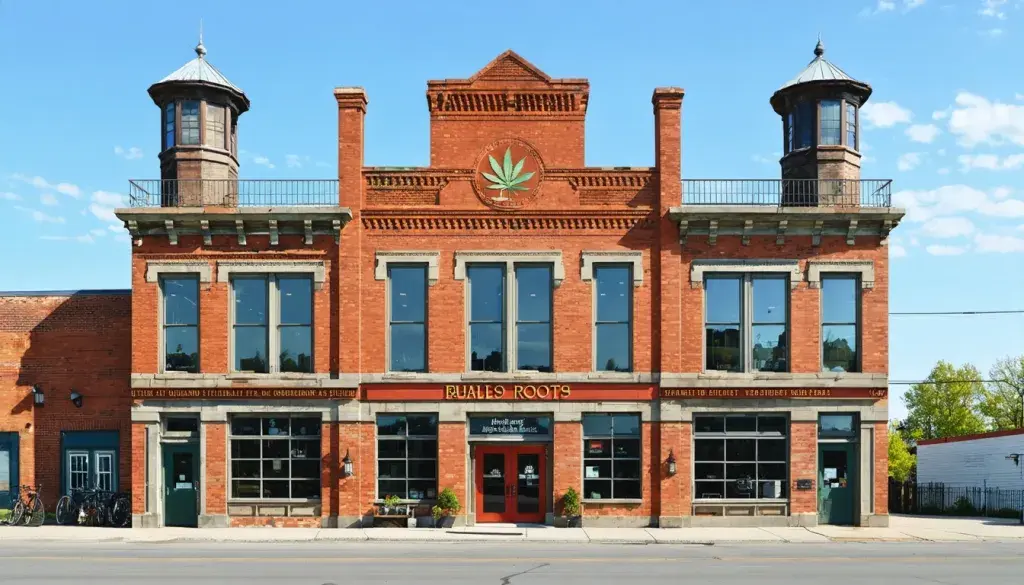
In Ypsilanti, Michigan, the 101-year-old former Farm Bureau building at 2 W. Forest Ave. transforms into Quality Roots' newest marijuana dispensary on July 31, breathing new life into a long-neglected landmark and signaling the cannabis industry's role in urban revitalization.
From Blight to Renewal: A $2 Million Overhaul
Once deemed unoccupiable and listed among Ypsilanti's dangerous buildings in 2015, the structure faced severe decay—collapsing walls, flooded basements, and wildlife infestations. Quality Roots invested $2 million over 14 months, partnering with Farbman Group and local entrepreneur Jeff Guyton, to restore it while preserving iconic towers, silos, and exposed brick. This project also involved demolishing adjacent structures like the Frog Island Beer building, creating a modern retail space that honors Ypsilanti's heritage.
- Key renovations preserved historical elements amid extensive structural repairs.
- The effort returned a blighted property to the tax rolls, boosting local economy.
Quality Roots Expands with Community Focus
Birmingham-based Quality Roots, led by CEO Aric Klar, opens its seventh Michigan dispensary here, with more slated for Westland and Madison Heights. The store stocks 50-100 brands of flower, pre-rolls, vapes, edibles, concentrates, and CBD, operating daily from 9 a.m. to 9 p.m. Klar emphasizes superior service, variety, and trust, aiming to uplift neighborhoods through such investments.
Social Equity and Broader Cannabis Trends
Ypsilanti's ordinance permits recreational marijuana retailers via Michigan's social equity program, targeting communities disproportionately harmed by past prohibition—like this one among 184 impacted areas. Guyton, a longtime resident, joined to renovate dilapidated sites and foster economic opportunity, noting the industry's potential to heal prohibition's scars on friends and families. This aligns with Michigan's cannabis boom: since 2018 legalization, dispensaries have generated billions in revenue, spurring job creation and property rehab in post-industrial cities. Yet, implications include navigating zoning tensions and ensuring equitable benefits amid rapid market growth.
- Social equity aids those affected by enforcement disparities.
- Opening deals and future grand events highlight customer engagement.
Quality Roots' Ypsilanti venture exemplifies how legalized cannabis drives historic preservation and community renewal, potentially setting a model for other Rust Belt towns balancing tradition with economic innovation.