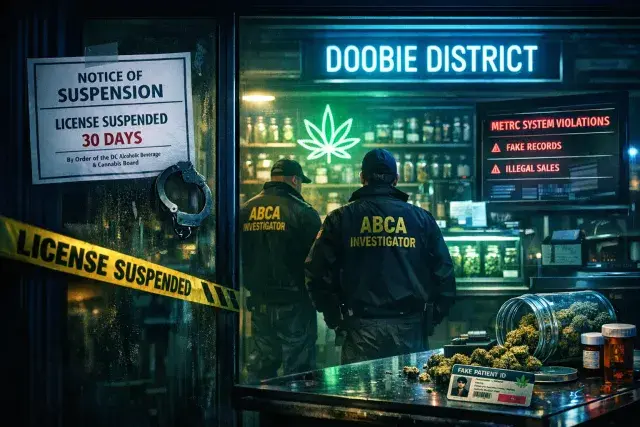
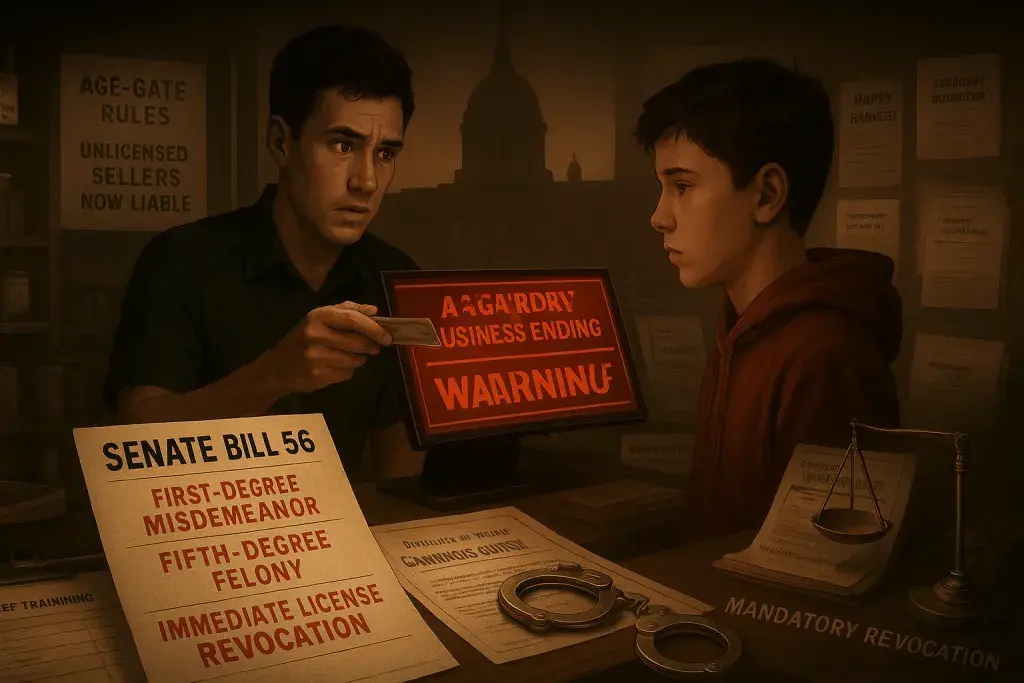
Ohio's Senate Bill 56 has extended criminal liability for distributing cannabis to anyone under 21 - and this time, the law doesn't stop at licensed dispensaries. Any person who knowingly sells or gives cannabis to a minor now faces a first-degree misdemeanor, with repeat offenses escalating to a fifth-degree felony. For licensed operators, the stakes are higher still: the Division of Cannabis Control is now required to immediately revoke any cannabis license held by someone found guilty of selling to an underage individual.
What Changed - and Why the Gap in Old Law Mattered
The prior framework had a notable structural flaw. Criminal penalties for knowingly selling cannabis to someone under 21 applied only to agents of licensed dispensaries. Anyone outside the licensed supply chain - a private individual, an unlicensed seller, someone operating in the gray or illicit market - faced no equivalent criminal charge for the same act. The underage recipient bore the legal consequence; the adult supplier largely did not, unless they held a dispensary license.
S.B. 56 closes that gap by applying the misdemeanor standard universally. In practice, that means licensed and unlicensed actors are now subject to the same baseline criminal exposure for distribution to minors. The escalation path - first offense as misdemeanor, repeat offenses as a fifth-degree felony - creates a tiered deterrence structure more consistent with how alcohol distribution law works in most states.
What's striking here is the mandatory license revocation clause. Former law gave the DCC discretion: it could suspend or revoke a license based on the circumstances. That flexibility is gone. A conviction for selling to a minor now automatically triggers revocation. For multi-location operators or vertically integrated businesses, a single employee's conduct at point of sale could void a license that represents significant invested capital - build-out costs, inventory, wholesale contracts, and all.
Compliance Pressure at the POS Level
This is where the operational weight lands. Dispensary compliance teams have always been responsible for age verification at the point of sale - most state-licensed markets require a valid government-issued ID scan before any transaction, and reputable POS systems flag unverified customers before a budtender can complete a sale. Ohio is no different in that expectation. But mandatory revocation raises the cost of a failure from regulatory sanction to automatic license termination.
The thing is, most compliance failures in age verification aren't policy failures - they're process failures. A distracted employee, a system that wasn't properly configured, a moment where the ID scan step was skipped. Operators who have treated age verification as a checkbox item rather than a trained protocol now have a concrete reason to revisit that posture. Staff training documentation, POS audit logs, and mystery-shopper compliance programs are no longer just good practice; they're the paper trail that separates a defensible compliance program from a license-ending event.
Wholesale and brand partners supplying Ohio dispensaries should take note as well. If a retail licensee loses their license over an age-gate violation, outstanding purchase orders, consignment arrangements, and wholesale receivables become immediately complicated. Vendor contracts with Ohio dispensaries may warrant a closer look at termination and license-loss provisions.
The Broader S.B. 56 Environment - Regulatory Volatility as a Business Variable
S.B. 56 is not a narrow bill. It has generated multiple lawsuits, a failed citizen petition, and ongoing litigation over its ban on intoxicating hemp products - the kind of regulatory turbulence that makes long-term planning genuinely difficult for Ohio operators. A temporary statewide pause on enforcement of the hemp ban was secured by two Columbus companies, Happy Harvest and Get Wright Lounge, through May 6, with a hearing set for May 4. A separate injunction limited the bill's implementation in Sandusky without affecting state-wide enforcement.
For hemp-adjacent businesses - those that have been selling THC-infused beverages or other intoxicating hemp products outside the licensed dispensary channel - the legal uncertainty is acute. They cannot purchase new inventory under the court's terms, even while their existing stock remains sellable through the temporary pause. That's a supply chain freeze, effectively, while a legal outcome is still pending.
Also worth noting: S.B. 56 repeals the former law that penalized parents or guardians who knowingly allowed minors to use cannabis in their home. That provision is gone. The removal is somewhat counterintuitive given the bill's stated emphasis on youth protection - but it reflects the broader patchwork nature of legislation that has moved quickly through competing political interests.
What Operators Should Do Now
Ohio's regulatory environment is in flux, but the age-verification changes under S.B. 56 are not paused and are not subject to any current litigation. They are in effect. Licensed operators should treat this moment as an immediate compliance audit trigger.
- Review POS system configurations to confirm age verification is a required, non-bypassable step before transaction completion
- Audit staff training records and update protocols to reflect mandatory revocation consequences
- Document compliance procedures - not just policies - in writing, with timestamps and employee acknowledgment logs
- Consult legal counsel on how the mandatory revocation language interacts with existing license insurance, investor agreements, or multi-entity ownership structures
- Brief wholesale and brand partners on the license stability risks now embedded in Ohio retail compliance
Ohio's adult-use market is still relatively young. Operators have invested heavily in buildouts, licensing fees, and inventory to compete in a state that only recently expanded beyond medical cannabis. Losing a license over a point-of-sale failure - one that is now non-discretionary, not subject to regulatory mercy - is a business-ending outcome. The compliance math has changed. The procedures need to match it.