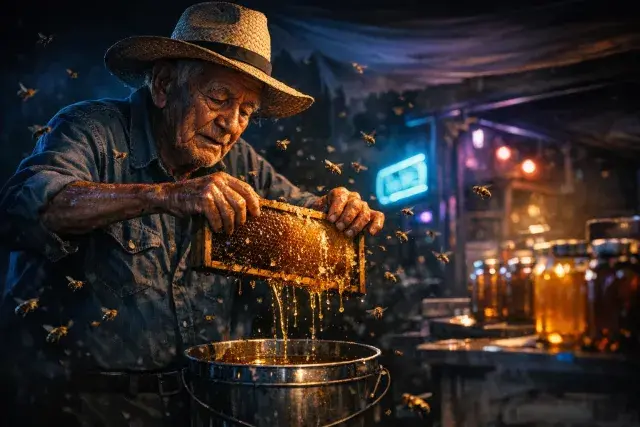
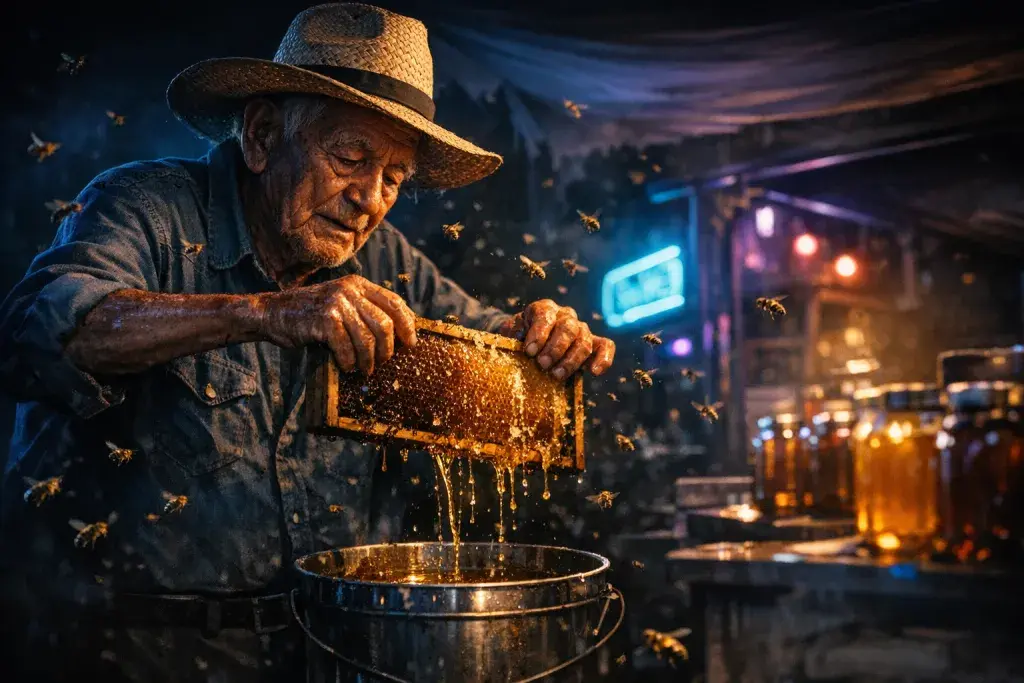
Victor Jaramillo has endured more than a dozen bee stings yet extracts honey barehanded from his hives. At 100 years old, the El Sereno resident runs a modest stand selling his bees' products in front of his home, drawing loyal customers from across Los Angeles. His fearless approach stems from a lifetime bond with bees, forged since age 3 in Zacatecas, Mexico, and sustained through nearly five decades in California.
A Family Legacy Spanning Generations and Borders
Jaramillo learned beekeeping from his father and grandfather before arriving in northern California in 1946. He later settled in El Sereno, northeast Los Angeles, where he opened his honey stand at 5236 S Huntington Dr. Last June 28, family and friends gathered to mark his 100th birthday, celebrating a man who tends his bees daily despite using a cane for support. He has shared his knowledge with 11 of his 15 children, including son John, who helps manage the operation. Customers reach the stand via Metro bus 78 at the Huntington/Lifur stop, paying cash, Zelle, or Venmo for jars of honey, royal jelly, and pollen. Open Monday to Saturday from 9 a.m. to 5 p.m., the business relies on product quality, not social media.
The Intricate World Inside the Hive
Bees collect nectar in a specialized stomach, distinct from their food stomach, then pass it mouth-to-mouth within the hive. Enzymes alter the nectar's consistency, leading to honey storage in wax-sealed hexagons. A single hive holds up to 60,000 bees this season. Worker bees, all female, labor until death after four months. Drones exist solely to mate with the queen, who lays 1,500 to 2,000 eggs daily and can live five years. Jaramillo harvests up to 50 pounds of honey per hive in just over a week, but maintenance demands vigilance against ants and wax moths. During California's droughts, the family supplements hives with vitamins and food as flowers withered.
Guarding Bees Amid Environmental Pressures
Bees pollinate crops that form nearly one-third of the human diet, including nuts, fruits, and vegetables, per the National Institutes of Health. Global warming threatens them through drought and habitat loss, underscoring the need for protection. Jaramillo warns against swatting bees, which can provoke stings. A honeybee's barbed stinger lodges in skin like a harpoon, killing the bee within an hour. "The bees are like my daughters," he says. His daily honey intake, shunning sugar, credits his vitality—he even recovered from COVID-19 and tumor surgery. At his stand, he educates neighbors from Pasadena to Pomona on these vital insects.